Pleated Fabric for Bridal Gowns and Evening Dresses; Essential Tips for Selection, Sewing, and Pressing
Pleated fabric, with its structured lines, three-dimensional texture, and movement across the surface of a garment, is an attractive choice for bridal gowns and evening dresses. Pleats can be used to create delicate detail in the skirt, introduce a distinctive shape to the bodice, or add controlled volume and movement to specific areas of a gown.
However, choosing pleated fabric is not simply a matter of appearance. The fabric’s composition, pleat structure, drape, construction, cutting, sewing, and pressing can all significantly affect the final result. For this reason, pleating should be considered part of the overall design and construction process rather than simply a decorative characteristic of the fabric.
What Should You Look for When Choosing Pleated Fabric for a Bridal Gown?
Not every pleated fabric is suitable for every bridal design. The first consideration should be the role the pleats are expected to play in the finished garment.
If the goal is to create movement and softness in the skirt, a fabric with suitable drape may be the better choice. For a more structured bodice, however, the fabric’s stability and the way the pleats sit against the body become more important.
The type of pleat also matters. Fine and closely spaced pleats, deep pleats, fan or sunray pleats, and wider pleats each create a different visual effect and behave differently during construction.
Another important consideration is that pleats occupy additional fabric volume. Therefore, fabric requirements and pattern placement need to be calculated according to the actual pleated structure rather than simply the fabric’s flat width.
Where Does Pleating Work Best on a Bridal Gown?
Pleats can be incorporated into different areas of a bridal gown, but their placement should correspond to the overall silhouette and construction of the design.
In the skirt, pleats can create movement and volume, becoming particularly noticeable as the bride walks.
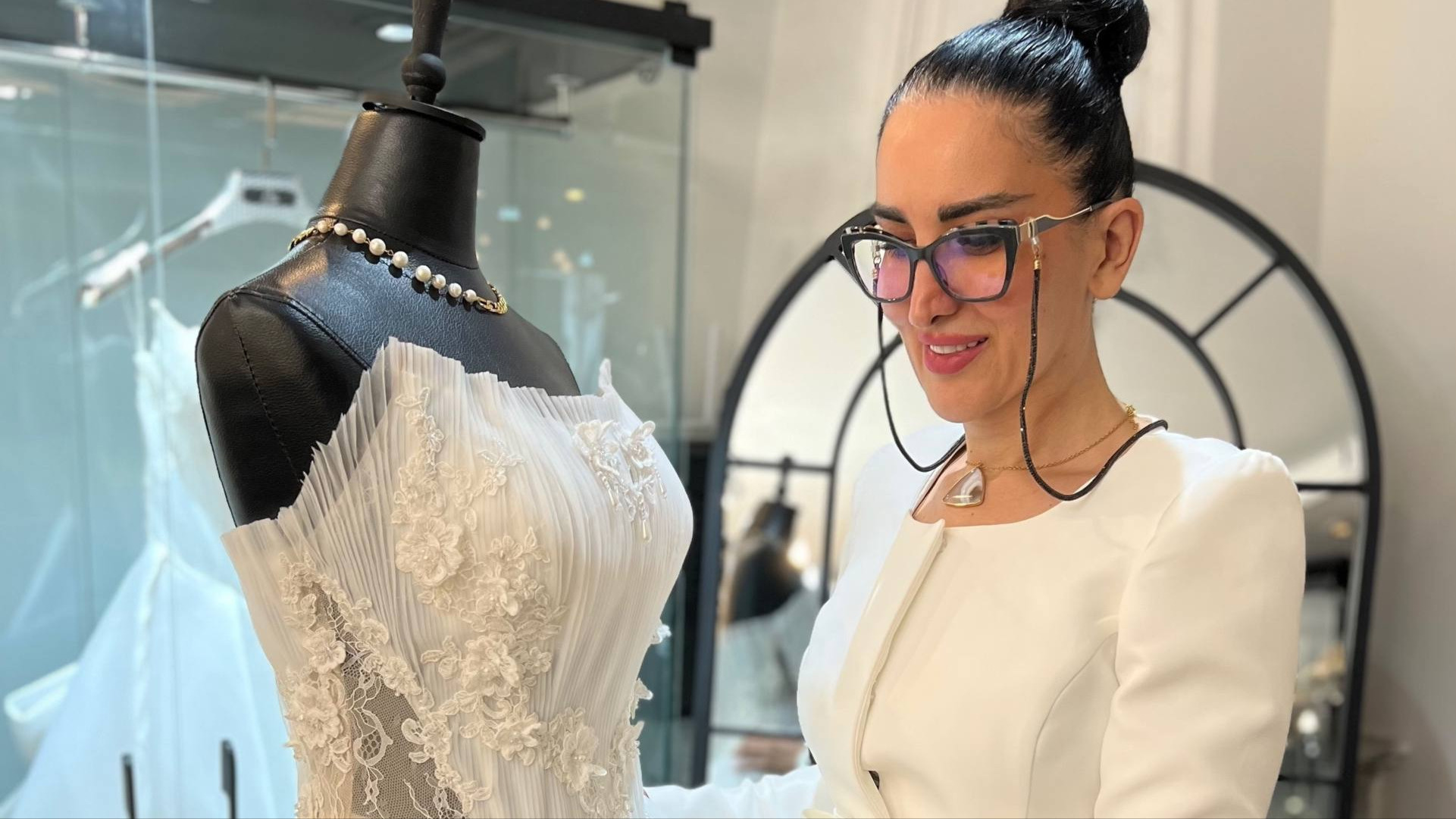
In the bodice, construction is more delicate because the fabric must follow the curves of the body. In designs such as a pleated bodice, even a small inconsistency in the spacing or direction of the pleats can become visible in the finished garment.
In sleeves or selected details, pleats can introduce texture and movement without allowing the pleated surface to dominate the entire silhouette.
The first step, therefore, is to determine whether the pleats are intended to shape the garment, add volume, or simply provide decorative detail. The fabric and construction technique should then be selected accordingly.

What Are the Main Challenges of Sewing Pleated Fabric?
One of the main challenges when working with pleated fabric is that the pleats can shift or distort during cutting, handling, and sewing. If the fabric is stretched or compressed during cutting, the spacing between pleats may no longer remain consistent across different garment pieces.
With pre-pleated fabrics, the pleated structure should be disturbed as little as possible during cutting, and the pieces should be handled carefully. Depending on the construction method, the pleats may also need to be shaped and secured before final assembly.
Accurate marking and keeping the pleats securely in position before sewing are essential. In professional garment-construction techniques, accurate measurement, securing pleats, and pressing them before construction help maintain consistency and precision.
This is particularly important in bridalwear because even a small difference between pleats can become highly visible across a large skirt or on a fitted bodice.
Why Is Pressing Important When Constructing Pleated Fabric?
A professional bridal gown is not created through accurate patternmaking and sewing alone; proper pressing and shaping are an essential part of the final construction process.

When working with pleats, pressing is not simply about removing wrinkles. It can help stabilize pleat lines, organize folds, and control the shape of the pleats throughout the construction process.
Pleats and folds may need to be pressed into position before being joined to other sections of the garment. After sewing, the seam and direction of the pleats should also be checked and carefully pressed. For curved areas, such as a bodice, an appropriate pressing surface can help shape the fabric without distorting the garment.
However, not every pleated fabric can be pressed using the same temperature, steam, or pressure. The fiber content, fabric structure, and type of pleating determine how the fabric should be handled. Testing the pressing method on a small piece of the same fabric before working on the finished garment is therefore essential.
Common Problems When Working with Pleated Fabric
A significant part of the quality of a pleated garment depends on preventing mistakes that may seem minor but can have a major effect on the final appearance.
1. Uneven Pleat Spacing
If the pleats are not measured or controlled accurately, the spacing between them can vary across different areas of the garment. This becomes especially noticeable on bodices and wherever pleats meet pattern lines or seams.
Solution: Before final stitching, check the spacing, direction, and placement of all pleats.
2. Pleats Opening or Losing Their Shape
Pleats may lose their original structure during cutting, sewing, or pressing. This can be related to the fabric itself, the way the pleats were formed, or the pressing process.
Solution: First determine whether the pleats are heat-set or structurally formed, then use a pressing method appropriate for that specific fabric and pleat structure.
3. Stretching or Rippling Along the Seam
Movement of the fabric during sewing can cause pleats to gather at the seam or lose their regular structure.
Solution: Keep the pleats controlled during construction and avoid stretching the fabric while sewing. Temporary securing techniques can help maintain the position of the pleats before final stitching.
4. Losing the Pleat Structure Through Incorrect Pressing
Excessive heat or pressure can alter the shape of the pleats instead of stabilizing them. On some fabrics, it can also create unwanted shine or pressing marks.
Solution: Use a pressing cloth when appropriate and select the pressing method according to the fabric composition and structure.
5. Excessive Bulk at Pleat Joins
When many pleats are gathered into a single seam, the thickness of that area increases. This can make the waistline or seam appear bulky.
Solution: The additional bulk created by the pleats should be considered during pattern development and construction. The joining method should prevent the seam from becoming unnecessarily thick.
6. Pleats Losing Their Shape Over the Bodice
This is one of the major challenges of pleated bridalwear. Pleats that appear perfectly regular on a flat surface may change their spacing or direction when placed over the curves of the bust and waist.
Solution: The pattern, cutting, and shaping process must be designed around the pleated structure from the beginning. It is not always possible to construct perfectly regular pleats on a flat surface and simply expect them to conform to a curved bodice without adjustment.
7. Ignoring the Direction of the Pleats
Even a partial change in pleat direction can disrupt the visual balance of the garment.
This is particularly important in long skirts and symmetrical bodices, where the direction of the pleats should be checked carefully before final construction.
Pleating on the Bodice; Where Precision Matters Most
A pleated bodice is one of the most striking yet technically demanding applications of pleated fabric in bridalwear.
On a flat surface, controlling pleats is relatively straightforward. Once the fabric is placed over the body, however, the pleat lines must work with the bust, waist, and pattern lines of the bodice.
At this stage, simply having evenly spaced pleats is not enough. It is also necessary to check that the pleats are not being pulled across the body, that they do not create unwanted bulk around the bust, and that their structure remains consistent as they meet the waistline and construction seams.
This is where the difference between simply using pleated fabric and achieving a professionally constructed pleated bridal gown becomes clear.

What Should Be Checked Before Final Stitching?
Before permanently securing the garment, check the following:
Pleat spacing → Pleat direction → Fabric allowance → Pattern placement → Fit on the body → Seam placement → Seam bulk → Pressing result
If any of these elements is overlooked during the early stages, correcting the problem after the gown has been fully embellished can become considerably more difficult.
This is particularly important in bridalwear because once lace, appliqué, pearls, crystals, or other embellishments have been added, access to the fabric surface for correction or pressing becomes much more limited.
Is Pleated Fabric Always a Suitable Choice for a Bridal Gown?
No. Pleated fabric is most successful when its characteristics complement the design of the gown.
If a design requires an entirely smooth and highly structured surface, pleating may not produce the desired result. Likewise, heavy embellishment can affect the drape and movement of delicate pleated fabrics.
Therefore, pleated fabric should not be selected solely because it looks beautiful on the bolt. The behavior of the fabric in the finished garment, its drape, structure, pleat type, placement, and the weight of any embellishment should all be considered.

Conclusion
Pleated fabric can bring movement, texture, and distinctive elegance to bridal gowns and evening dresses. However, achieving a professional result depends on more than simply selecting an attractive pleated fabric.
Accurate cutting, controlled sewing, shaping, and proper pressing are just as important as the fabric itself. This becomes particularly evident in a pleated bodice, where the pleats must work with the natural curves of the body.
For this reason, in bridalwear construction at Queen Land, pleating should not be viewed merely as a decorative element. It should be considered an integral part of the garment’s structure, fit, and final silhouette.
Frequently Asked Questions About Pleated Fabric for Bridal Gowns and Evening Dresses
Is pleated fabric suitable for bridal gowns?
Yes, but the choice should be based on the gown’s design, the fabric’s drape and structure, and the intended placement of the pleats. Pleats can work beautifully in skirts, bodices, sleeves, and selected details, but not every type of pleated fabric is suitable for every design.
Can pleated fabric be pressed?
Yes, but the pressing method must be appropriate for the fabric and its pleat structure. Excessive heat or pressure can cause pleats to open, lose their shape, or develop unwanted marks. Testing the method on a piece of the same fabric is recommended before pressing the finished garment.
Why do pleats become uneven after sewing?
Stretching the fabric during sewing, shifting pleats, inaccurate marking, or failing to control their direction and spacing can cause unevenness. Properly securing the pleats before final stitching helps maintain their alignment.
Why is pleating more difficult on a bodice?
Because the bodice is not a flat surface. The pleats must adapt to the curves of the bust, waist, and pattern lines. Without coordination between patternmaking, cutting, and construction, the spacing or direction of the pleats can change across the body.
Can pressing cause pleats to open?
Yes. Incorrect heat, steam, or pressure can alter the structure of certain pleated fabrics. The fabric composition and the method used to create and stabilize the pleats should be considered before pressing.
What is one of the most common problems when sewing pleated fabric?
One of the most common problems is a change in the spacing or direction of the pleats during cutting and sewing. This can become particularly noticeable on large garment sections and fitted bodices.
Can crystals and pearls be applied to a pleated bridal gown?
Yes, but the weight and placement of the embellishments should be considered. Heavy embellishment can affect the drape and movement of delicate pleated fabrics and can also make pressing and finishing more difficult.
What should be considered when choosing pleated fabric for a bridal gown?
Consider the pleat type, fabric weight, drape, structure, ability to retain its shape, intended placement, and compatibility with the gown’s pattern and embellishments. The appearance of the fabric alone is not enough to determine whether it is suitable.
Can every fabric be pleated?
No. Different fibers and fabric structures respond differently to heat, moisture, and pressure, and not every fabric will retain the same type of pleat. The fabric’s ability to form and maintain the desired pleat should therefore be assessed before final construction.